by WANG Junfang
photo by JIAO Siqin & ZHOU Junzhang
edited by LI Ruixin
translated by YOU Shunqin
Qichun County in Hubei Province is famous for its Qi'ai, a wild mugwort that thrives in poor soil and grows stronger through wind and rain. At China University of Geosciences, Wuhan (CUG), graduating senior Zhou Junzhang, who comes from Qichun, embodies that same resilience. Diagnosed with spinal muscular atrophy (SMA) at age two, Zhou has undergone 14 surgeries. Yet he has ranked first in his major for three consecutive years and has now been admitted to CUG's integrated undergraduate-to-PhD program.
On June 18, CUG held its commencement ceremony, where President Li Jianwei presented Zhou with his degree certificate and congratulated him on his graduation and on continuing his studies at the university. “Keep it up,” Li told him. “May you carry this resilient spirit forward, achieve new breakthroughs, and inspire others through your example.”
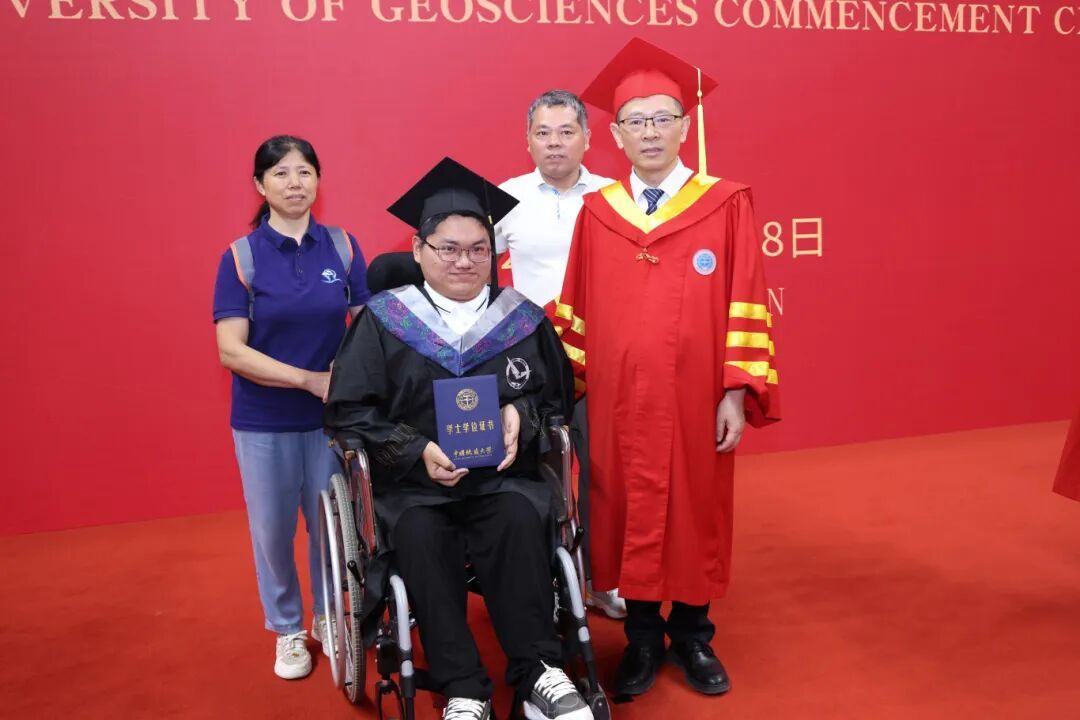
President Li Jianwei presents Zhou Junzhang with his degree certificate.
“I may be confined to a wheelchair,” Zhou said, “but my dreams soar freely in the sky. I am deeply grateful to CUG for supporting and nurturing me. Today, as the president turned my tassel, I felt as though I had shed my timidity and become someone who can truly contribute to society.”
Studying from a Wheelchair
Zhou Junzhang was born in 2004 into a rural family in Qichun County, Huanggang, Hubei Province. At age two, he was diagnosed with severe SMA, a disease that causes progressive muscle degeneration and severely restricted mobility.
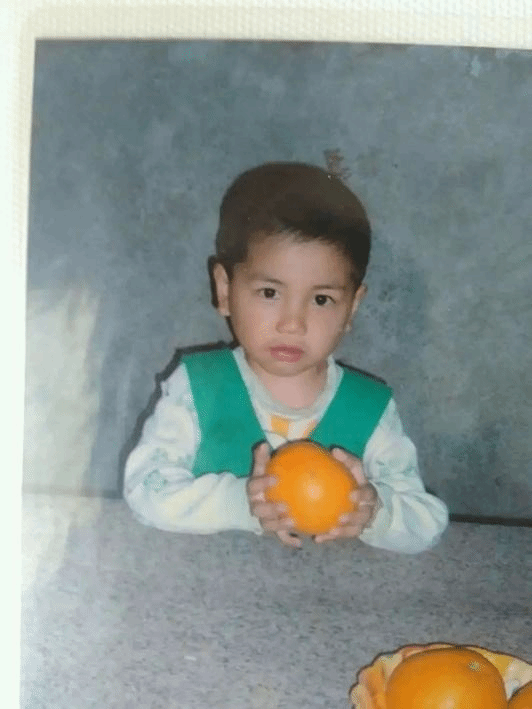
Zhou Junzhang in his childhood
With the unwavering support of his family, Zhou began a long battle against his condition, and surgery, rehabilitation and pain became a constant part of his life. To date he has undergone 14 operations. Yet neither physical pain nor the limits of his condition dimmed his thirst for knowledge or his longing for campus life.
Severe muscle atrophy left his fingers rigid and curled, so that he could write at only about a third the speed of an average person; taking notes or reviewing material took him many times longer than it did his classmates. Confined to a wheelchair for years, he relies on a rigid brace to support his upper body, one that has left thick calluses across his back and waist. Although doctors advised him against sitting for long stretches, he pushed through and studied up to 16 hours a day.
The six years he spent in middle and high school were the hardest chapter of his education. In high school, his classroom was on the second floor, and his parents took turns carrying him up and down the stairs every day. “Other children could relax and play after school, but he still had to study once his rehabilitation training was done,” his mother recalled. “Every time I saw him reading and writing through the pain, my heart ached for him. But as long as he wants to keep studying, we will always stand by him.”
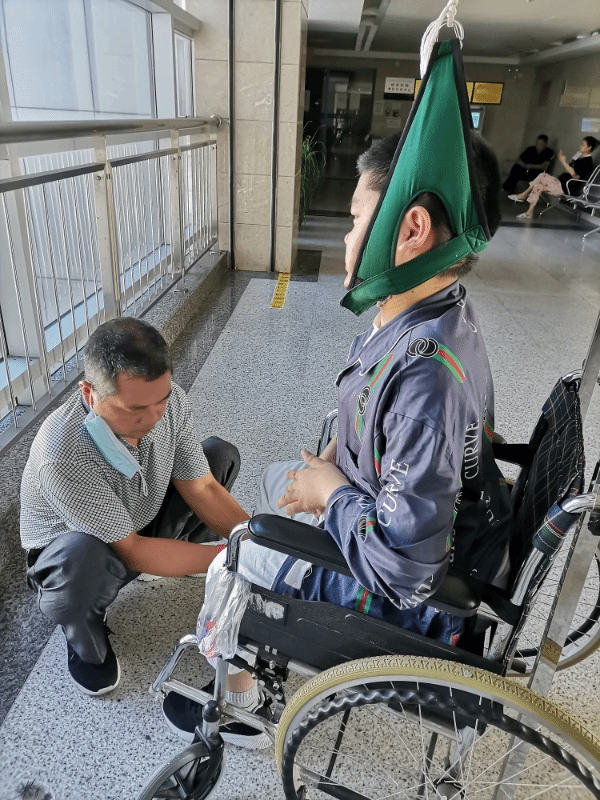
Zhou Junzhang receiving post-operative rehabilitation therapy
In the final stretch before the Gaokao – China's national college entrance examination – academic pressure was at its peak just as his symptoms flared up more severely than ever. After an emergency surgery, he refused to pause his studies, attending online classes and reviewing material even while lying on his side in bed and enduring intense pain. In 2022, his effort paid off: he achieved outstanding results in the Gaokao and was admitted to the School of Economics and Management at CUG.
Warm Support from the University
When he first arrived on campus, Zhou worried that accessibility facilities might be inadequate, that he might struggle to keep pace with classes, and that his circumstances might make it hard to fit in. The university's inclusive, caring environment quickly eased those fears, and he threw himself into class activities and competitions. “My teachers and classmates never treated me as someone different, which gave me a genuine sense of belonging,” he said.
The university arranged an accessible single dormitory for him. His parents moved to campus to care for his daily life and post-operative recovery, and also took jobs at the university to help support the family. At the start of his freshman year, his counselor, Xu Tianyi, personally walked the campus with him and mapped out accessible routes to his classrooms. Given the financial burden of years of medical treatment, the college put support policies in place, and alumni made voluntary donations to help ease the family's financial pressure.
Having received so much support, Zhou often felt he owed a debt to those around him. His counselor reassured him: “You don't need to feel that you owe anyone. Many of the people who have helped you once went through hard times themselves; by supporting you, they are passing on kindness they once received. When you achieve your goals and help others in need, that will be the greatest way to repay it.”
During the summer after his sophomore year, Zhou's condition worsened again: his scoliosis deteriorated to the point that it was affecting his breathing and swallowing, making high-risk spinal corrective surgery necessary. In an eight-hour operation – the largest of his life – surgeons implanted 28 titanium screws and other medical alloy materials into his body. He spent time in intensive care afterward, followed by a month in hospital and three months of bed rest.
Throughout his surgeries and recovery, Zhou kept up with his studies while support from the university never wavered. Instructors, including Wang Linzhu, set up online teaching channels and shared course materials with him; classmates took turns organizing lecture notes and sharing them in real time; and college leaders and his counselor regularly visited him in the hospital to check on his recovery.
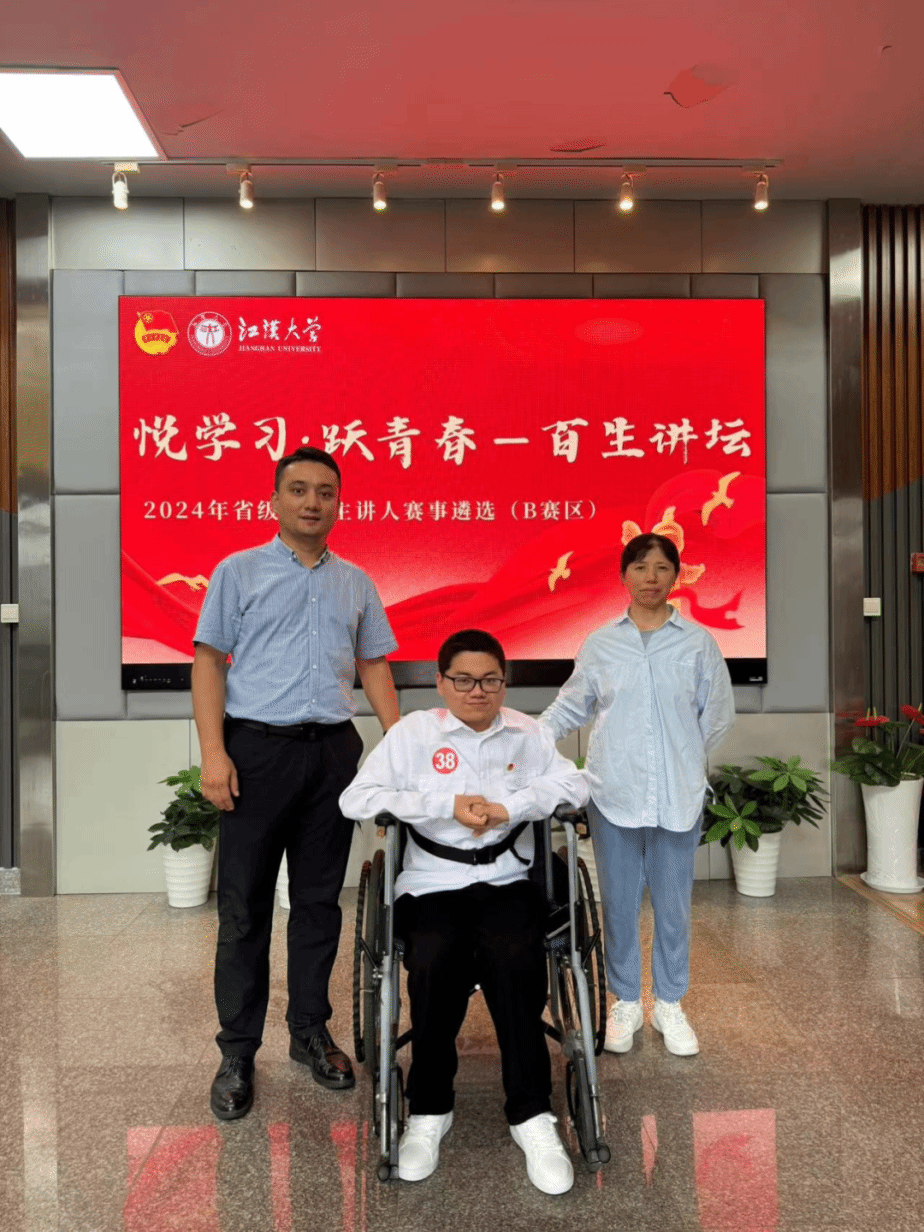
Zhou Junzhang taking part in the “Students Lecture Forum”
One of his proudest moments was competing in the Students Lecture Forum of Hubei Province. In the preliminary round, before his surgery, his breathing was so restricted that delivering a nine-minute speech was a major challenge; his teacher, Nuerxiati, held the microphone for him and stayed by his side until he finished. By the final round, Zhou was still recovering from the operation, but he refused to withdraw despite the pain. Drawing on the resilient “Qi'ai” spirit of his hometown, he delivered a speech on self-strengthening and won the title of Gold Medal Speaker.
His closest friend and classmate, Wang Haitong, quietly handled much of the legwork for their competitions and projects, and helped Zhou catch up on coursework whenever surgery set him back. “Junzhang has always been independent and strong-minded. He never wanted our sympathy or special treatment – we just helped him when needed,” Wang said. “His perseverance has always inspired the whole class. Whenever we feel like slowing down or giving up, seeing him keep going pushes us right back on track. We're not just classmates – we light the way for each other.”
Finding Strength in Slowness
When Zhou first arrived at university, he often struggled with self-doubt: his slow handwriting and limited mobility made him feel at a disadvantage, and watching classmates take notes and finish assignments with ease made him question whether he was working hard enough. Over time, he changed his mindset. Rather than trying to match others' pace, he stopped seeing “slow” as a weakness and turned it into a strength, building a learning rhythm suited to himself.
He learned to stay “one step ahead,” teaching himself difficult material in advance through online platforms such as Bilibili and Xiaohongshu so he could focus on key points during lectures. He also relied on speech-to-text tools and AI applications to work around his physical limitations and organize material more efficiently, and made a habit of reviewing the same material repeatedly to build a deeper, more systematic understanding.
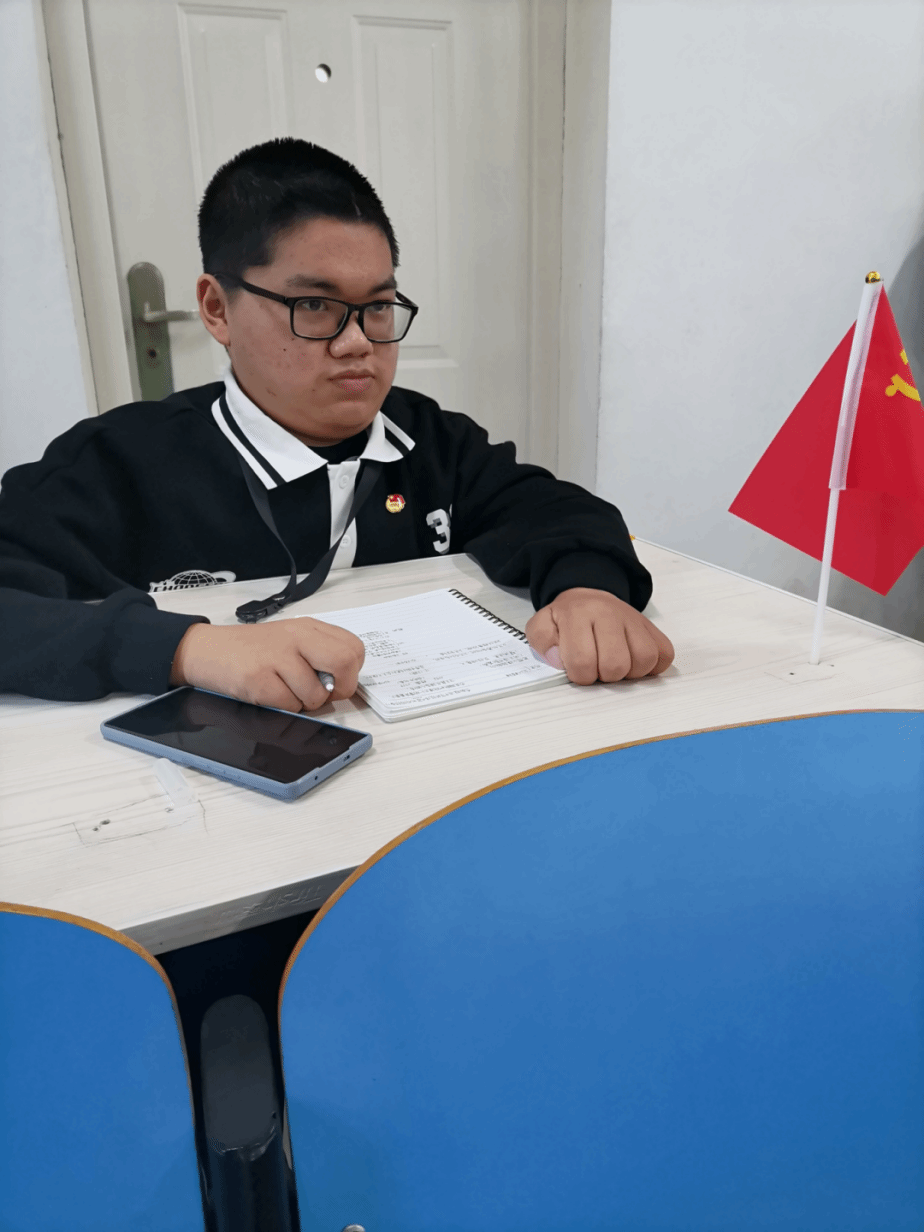
Zhou Junzhang in class
“I no longer treat ‘slow’ as a flaw, but as a way of choosing what matters,” he said. Because he moved more slowly, he learned to focus only on what truly counted, to think things through before acting, and to commit himself fully to each task. Guided by the belief that slow, careful work yields the finest results, he tackled one challenge after another: earning the Junior Accounting Certificate, competing in math contests, the National College Students' Financial Challenge, and the China International College Students' Innovation Competition, and winning awards at both the provincial and university level.
A line from Zeng Enxue, principal of his alma mater, Qichun No. 1 High School, has long stayed with him: “When your talent is not yet enough to support your aspirations, devote yourself to learning. When your abilities have not yet reached your goals, settle down and strengthen yourself.” Through years of unwavering effort, Zhou ranked first in his major for three straight years. In his final year he received offers from universities in other provinces, but chose to stay at CUG, where he was admitted to the university's integrated undergraduate-to-PhD program, ranking second in his major.
Becoming a Light for Others
Having been surrounded by kindness throughout his life, Zhou has always looked for ways to pass it on. As a top student through primary and secondary school, he often shared his study methods with classmates. During the COVID-19 pandemic, he worked through his own physical difficulties to provide online tutoring for younger students. At university, he has combined his statistical training with his own experience to study the employment barriers facing people with disabilities.
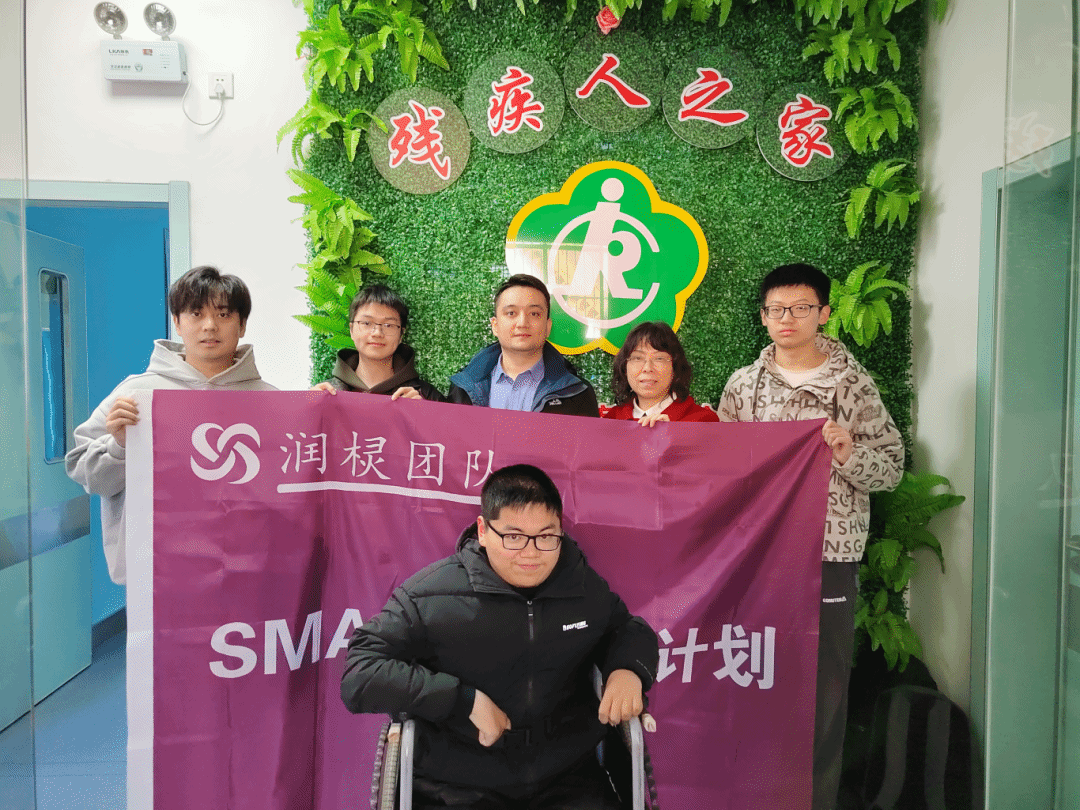
Zhou Junzhang leading the “Runling” team in the College Students' Innovation and Entrepreneurship Training Program
Zhou formed a student team and, under the guidance of Professor Wang Linzhu, secured a provincial-level College Students' Innovation and Entrepreneurship grant to research employment challenges facing people with disabilities in Hubei Province. He carried out field research at disabled persons' federations and communities across the province and produced a report of more than 40,000 Chinese characters. Drawing on his own experience, he also led the team to study the often-overlooked SMA community: through surveys and data modeling, they analyzed 179 cases in a study on the psychological health challenges and employment pathways of SMA patients, which was accepted for publication in the journal Medical Research.
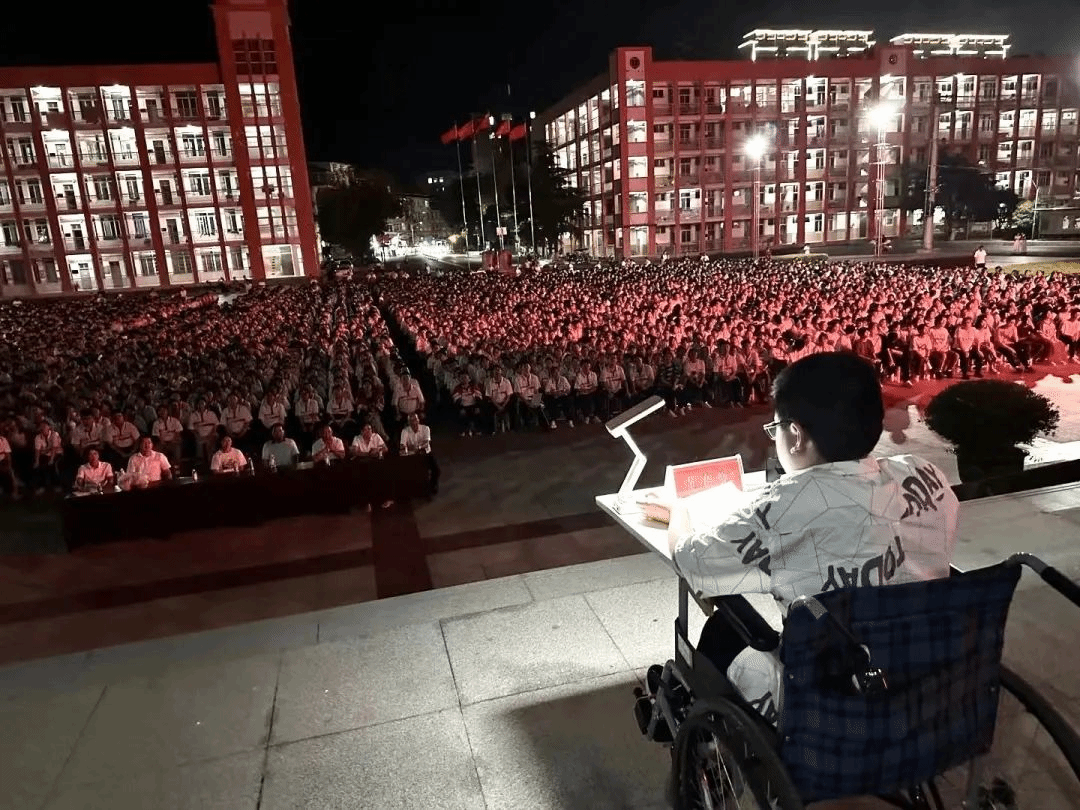
Zhou Junzhang giving a talk at his alma mater, Qichun No. 1 High School
To those around him, Zhou is an optimistic young man who embraces life fully. Once, Peng Chao, honored nationally as a “Role Model of Self-Reliance,” visited Zhou's high school to give a talk and wrote him the words “Believe in miracles,” an inscription Zhou has treasured ever since. Inspired by Peng, he now hopes to be a source of strength for others in turn. Through disabled persons' federations and online communities, he shares his experience of study and employment with young people with disabilities; offline, he volunteers and gives public talks, including on the protection of the Yangtze River, and has delivered dozens of inspirational talks at his former schools and in local communities. His mother, too, has been shaped by his outlook: “Junzhang has given me a very different experience,” she said. “I didn't receive much education myself, but through him I have gotten to experience university life, which is its own kind of blessing.”
As he begins his postgraduate studies, Zhou has been invited to join the research group of Professor Xu Deyi at the School of Economics and Management, working on the economics of critical minerals. Looking ahead, he plans to apply his training in statistics and big data analytics to forecasting critical mineral supply and demand and studying mineral resource industry and supply chains, contributing to China's energy security through his research.
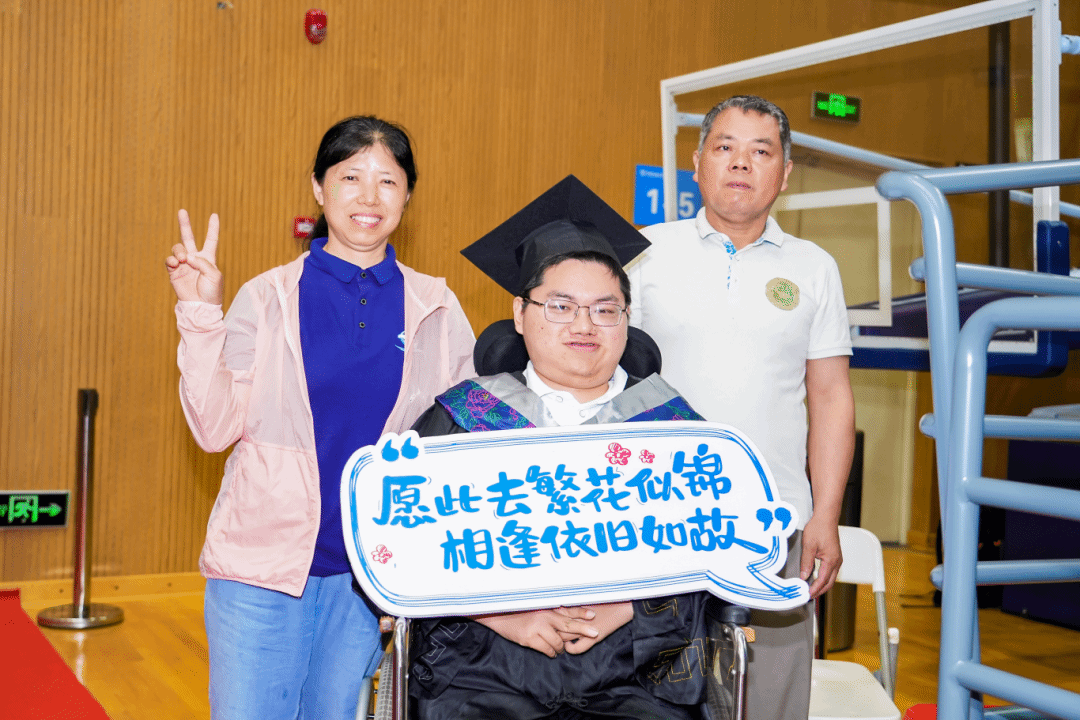
Zhou Junzhang's parents accompanying him at his graduation ceremony
From being diagnosed with SMA at age two, to entering CUG after years of battling illness, and now preparing for his integrated master's-PhD studies, Zhou has endured countless hardships along the way – much like the resilient Qi'ai of his hometown. “I cannot determine the length of my life, but I can expand its breadth,” he said. “In the future, I hope to devote myself to research that is closely connected to real-world needs. I would also like to work with grassroots-level disabled persons' federations, using my professional knowledge to help more young people with disabilities overcome barriers to employment, and pass on all the kindness I have received.”